Zeroverse
Description
_
_
A biofeedback VR experience where escape depends on breathing with—not controlling—another being.
My Role
_
_
Spatial Narrative · Environment Design · Character Design · Unreal Engine Prototyping
Tools
_
_
Unreal Engine, Blender, Tripo AI, Meshy AI
Status
_
_
Ongoing Prototype
Design Question
What if the only way forward was to breathe with a creature you could never fully control?
World Premise
Zeroverse is a vast megastructure collapsing from within. The player awakens as a disembodied digital glitch, able to enter its hidden systems but unable to touch the physical world.
The creatures inhabiting the ruins have bodies strong enough to climb, carry, and reshape their surroundings, yet the structure will not let them leave. By breathing in rhythm with one of them, the player can briefly share its body.
But the creature is never an avatar. It may hesitate, resist, or pull away. Escape begins only when both learn how to move together.
The creatures inhabiting the ruins have bodies strong enough to climb, carry, and reshape their surroundings, yet the structure will not let them leave. By breathing in rhythm with one of them, the player can briefly share its body.
But the creature is never an avatar. It may hesitate, resist, or pull away. Escape begins only when both learn how to move together.
Visual Direction
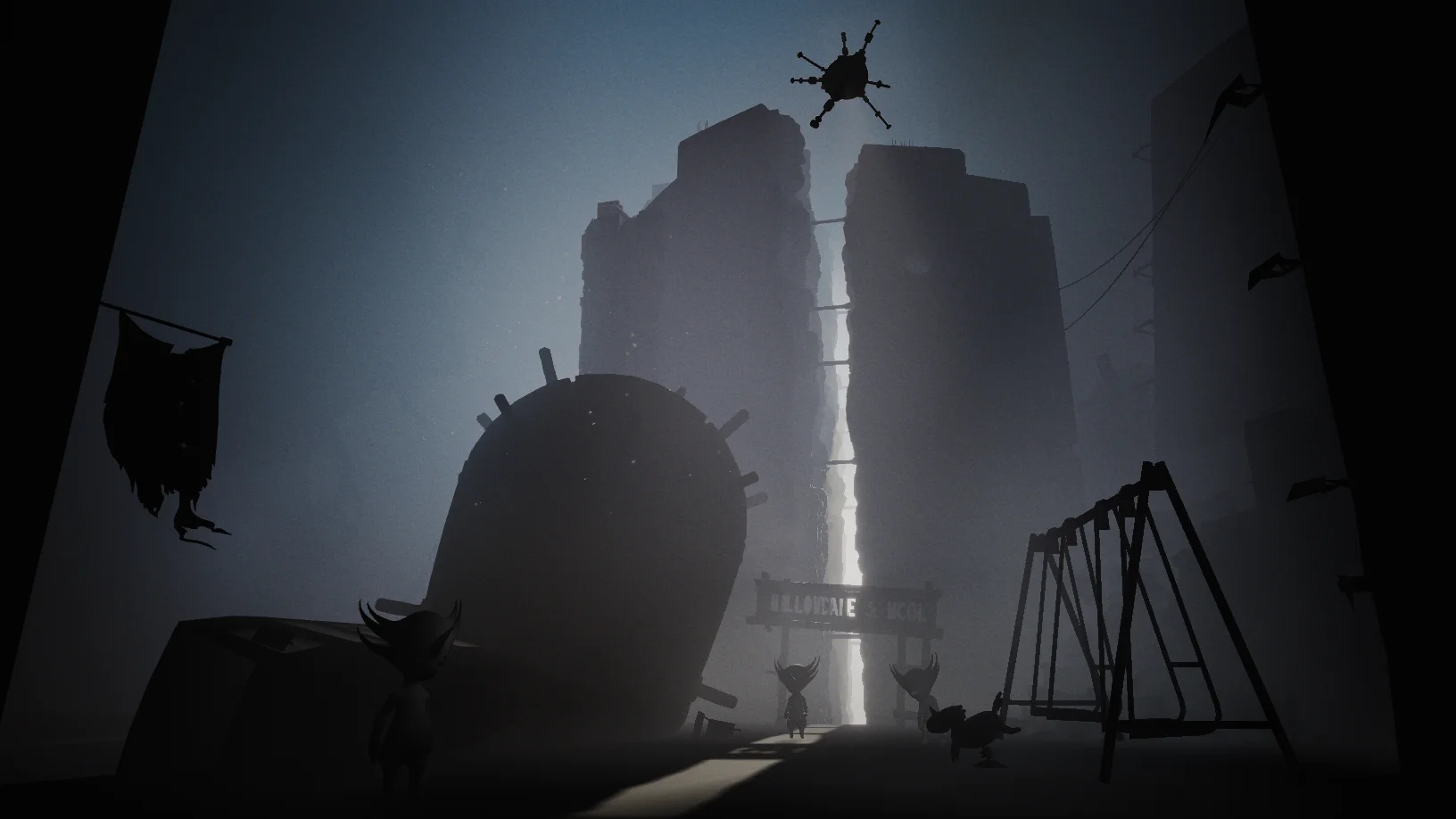
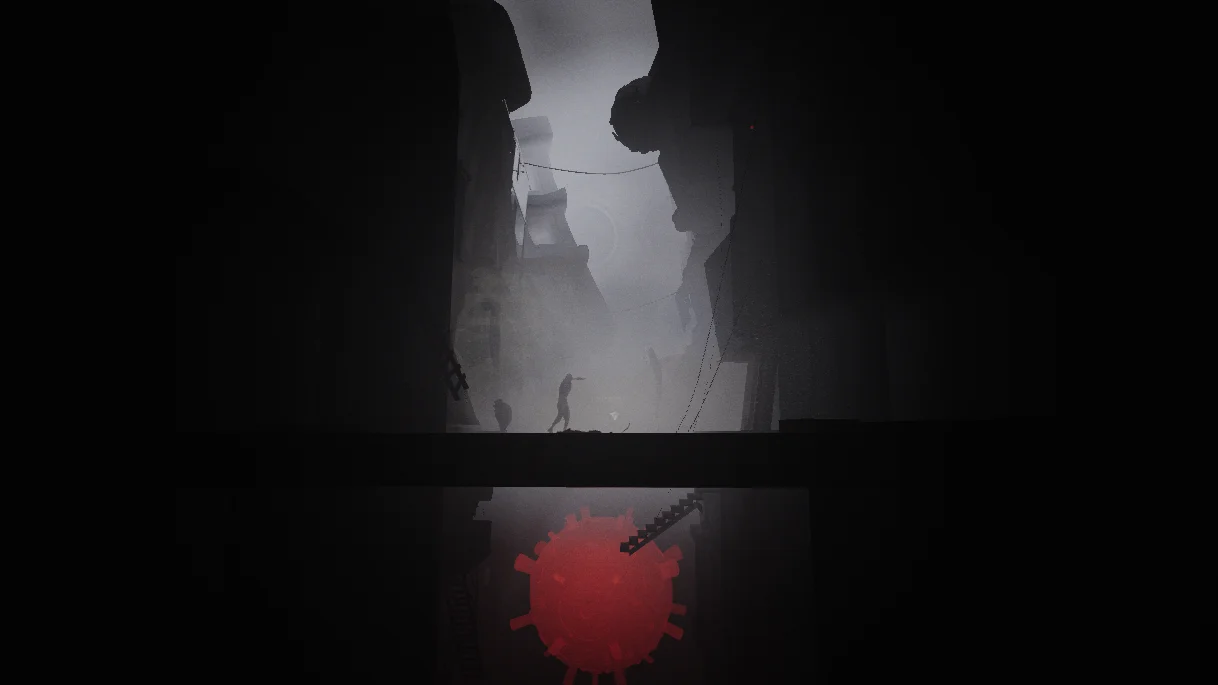
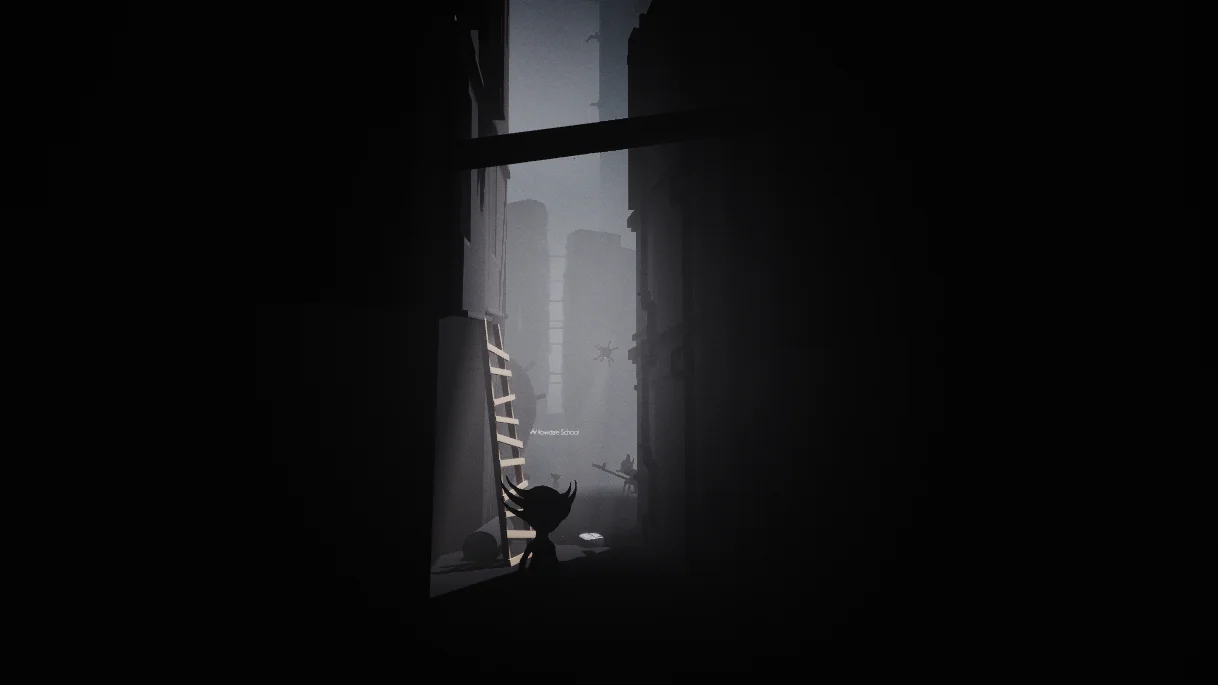
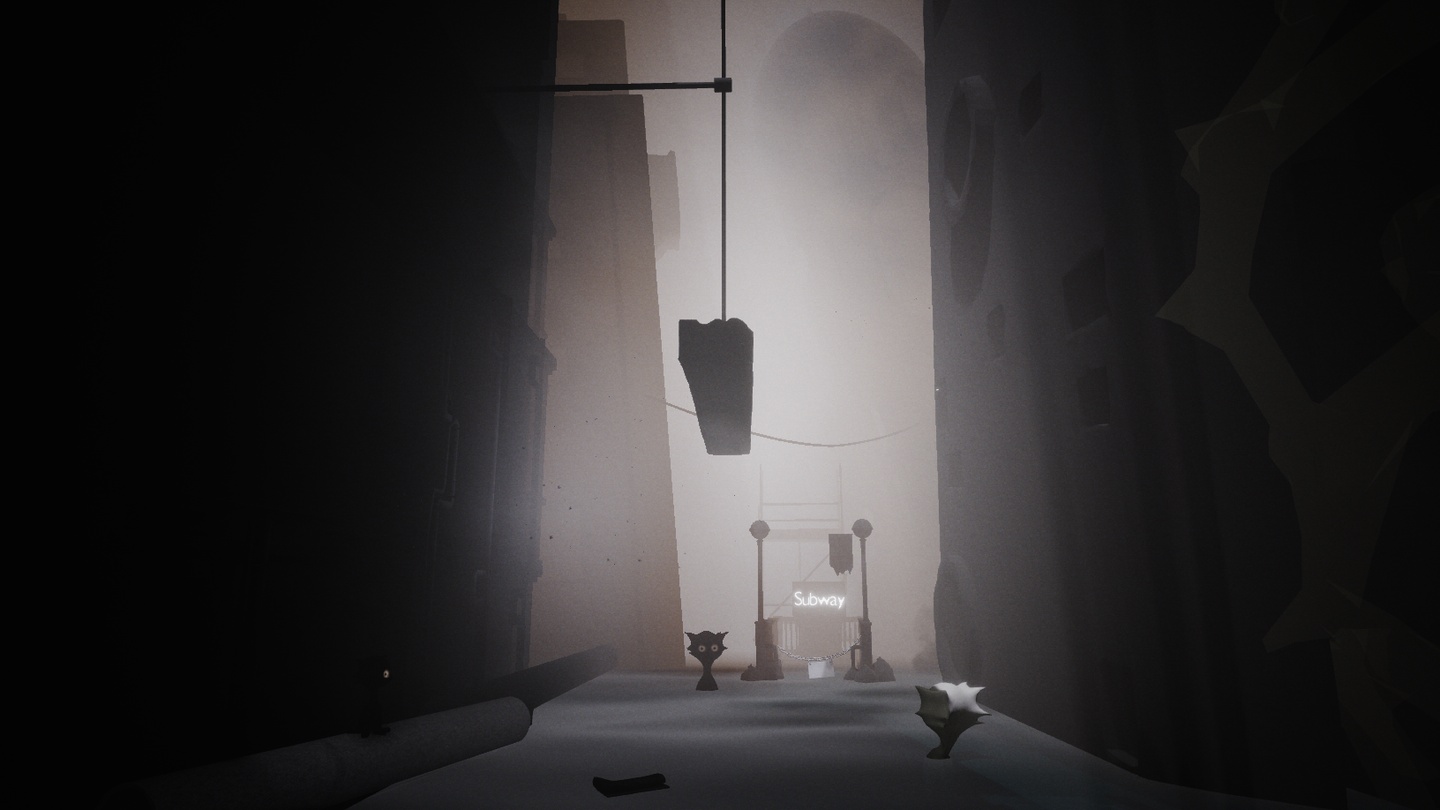
For the visual direction, I focused on the contrast between overwhelming architecture and fragile inhabitants. Dense silhouettes, narrow openings, and shafts of fogged light make possible exits feel visible but unreachable.
The near-monochrome palette turns the architecture into an oppressive mass, while rare red and bioluminescent accents reveal systems that are still alive.
The near-monochrome palette turns the architecture into an oppressive mass, while rare red and bioluminescent accents reveal systems that are still alive.
The city layer
Entering abandoned school
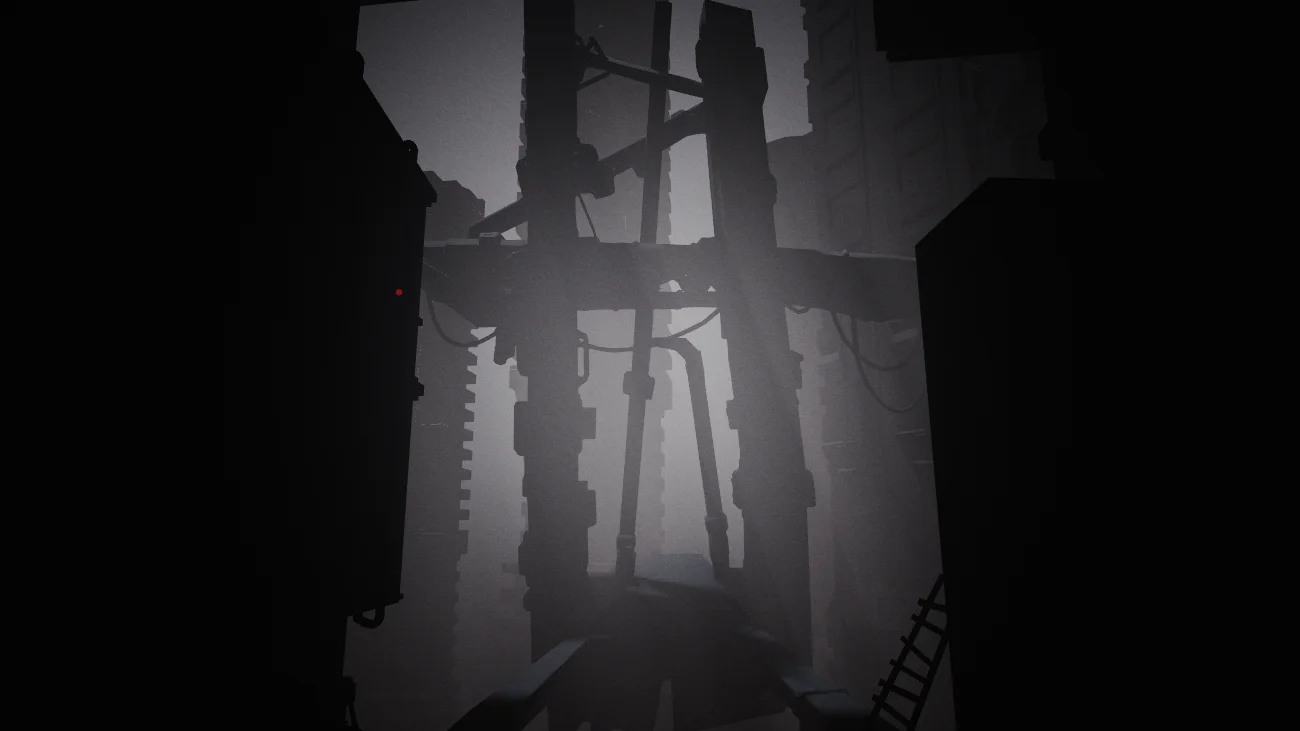
The bridge to Zeroverse
Bodies with Their Own Rhythms
The inhabitants of Zeroverse were designed as bodies with their own rhythms, rather than interchangeable avatars. Their silhouettes exaggerate weight, elasticity, and balance, allowing temperament to be read before interaction begins.
Each anatomy suggests a different movement language—springing, rooting, or drifting—and each creature responds to a specific pace of breath, touch, and intention. Their boundaries are part of their character: they may lose interest, close themselves off, or simply ignore the player. Cooperation begins by reading the body rather than issuing a command.
Each anatomy suggests a different movement language—springing, rooting, or drifting—and each creature responds to a specific pace of breath, touch, and intention. Their boundaries are part of their character: they may lose interest, close themselves off, or simply ignore the player. Cooperation begins by reading the body rather than issuing a command.
Player
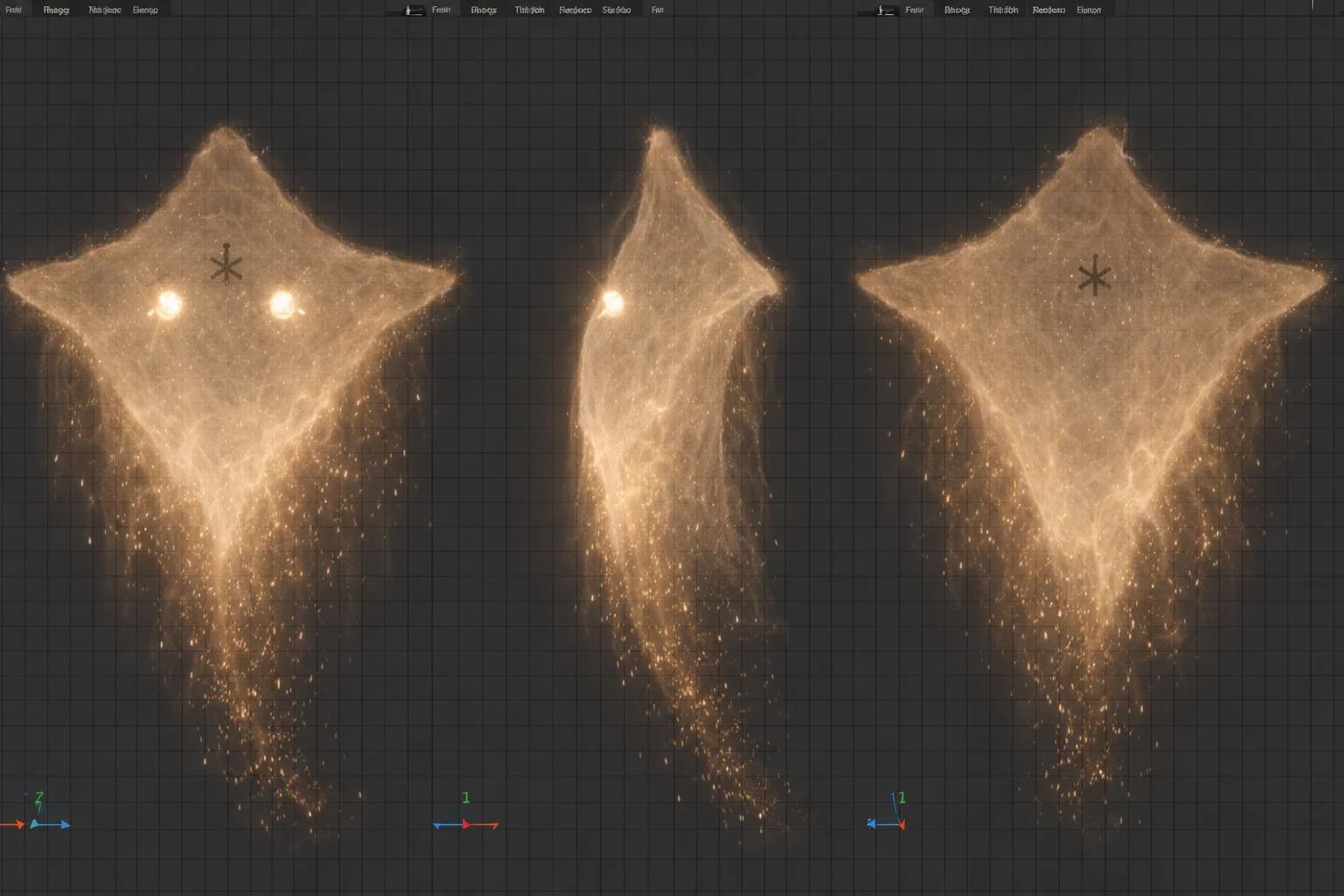
The player is visualized as an unstable field of particles rather than a conventional body. Their form gathers around a luminous core but never fully stabilizes, expressing their ability to enter hidden systems while remaining unable to touch the physical world.
Silhouette
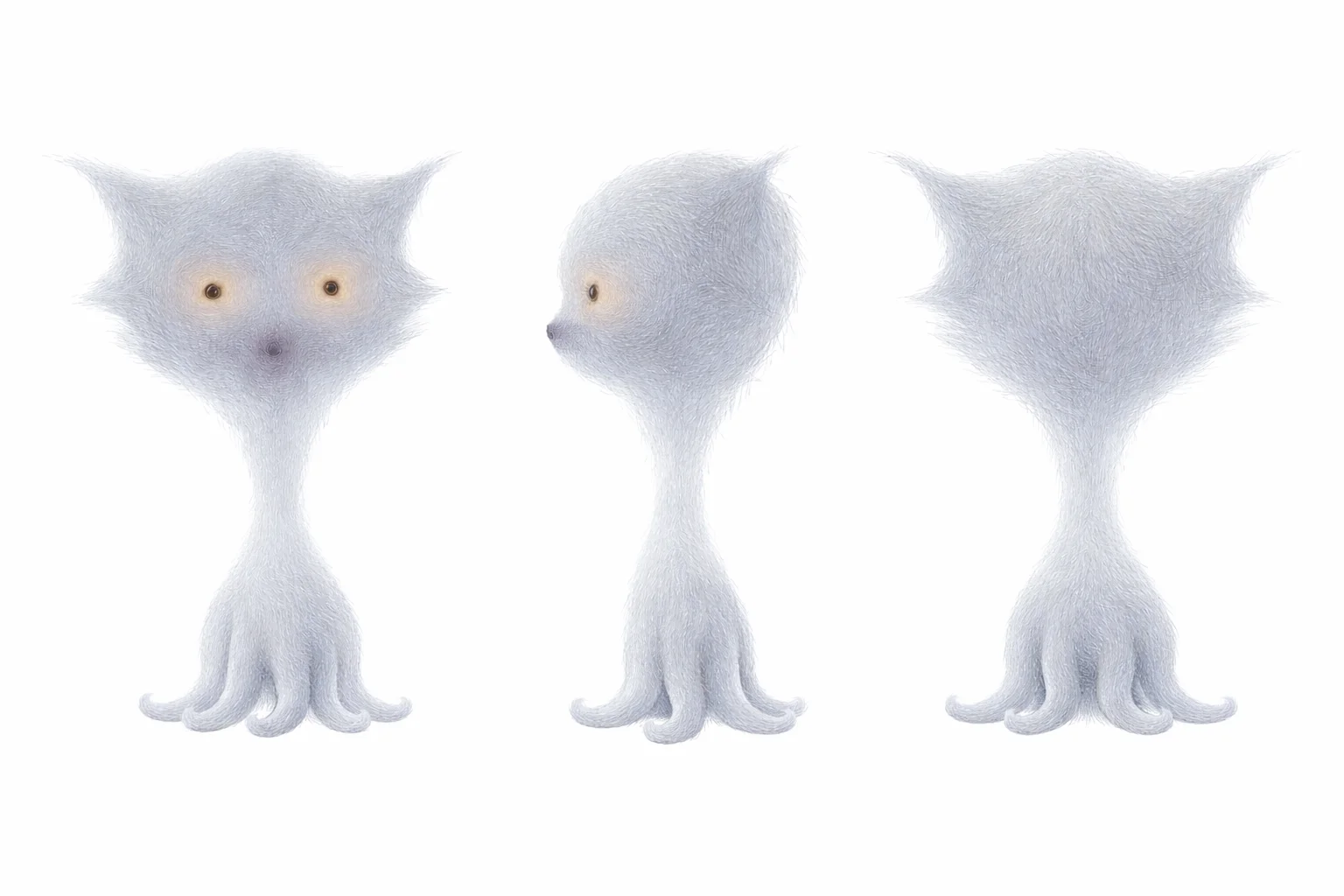
An oversized pointed head sits on a narrow neck and fused tentacle base, creating a top-heavy silhouette that feels alert, unstable, and ready to spring. Its soft form keeps the speed-driven creature playful rather than aggressive.
Movement
The base compresses and rebounds like a single elastic spring, while the neck and head twitch, dart, spin, and recoil. Even while idle, Jitter appears physically incapable of remaining still.
Boundary
Jitter rewards speed, steep drops, and risky movement with stronger acceleration. It loses interest in slow or flat routes, while sudden or aggressive actions make it retreat and freeze.
An oversized pointed head sits on a narrow neck and fused tentacle base, creating a top-heavy silhouette that feels alert, unstable, and ready to spring. Its soft form keeps the speed-driven creature playful rather than aggressive.
Movement
The base compresses and rebounds like a single elastic spring, while the neck and head twitch, dart, spin, and recoil. Even while idle, Jitter appears physically incapable of remaining still.
Boundary
Jitter rewards speed, steep drops, and risky movement with stronger acceleration. It loses interest in slow or flat routes, while sudden or aggressive actions make it retreat and freeze.
Silhouette
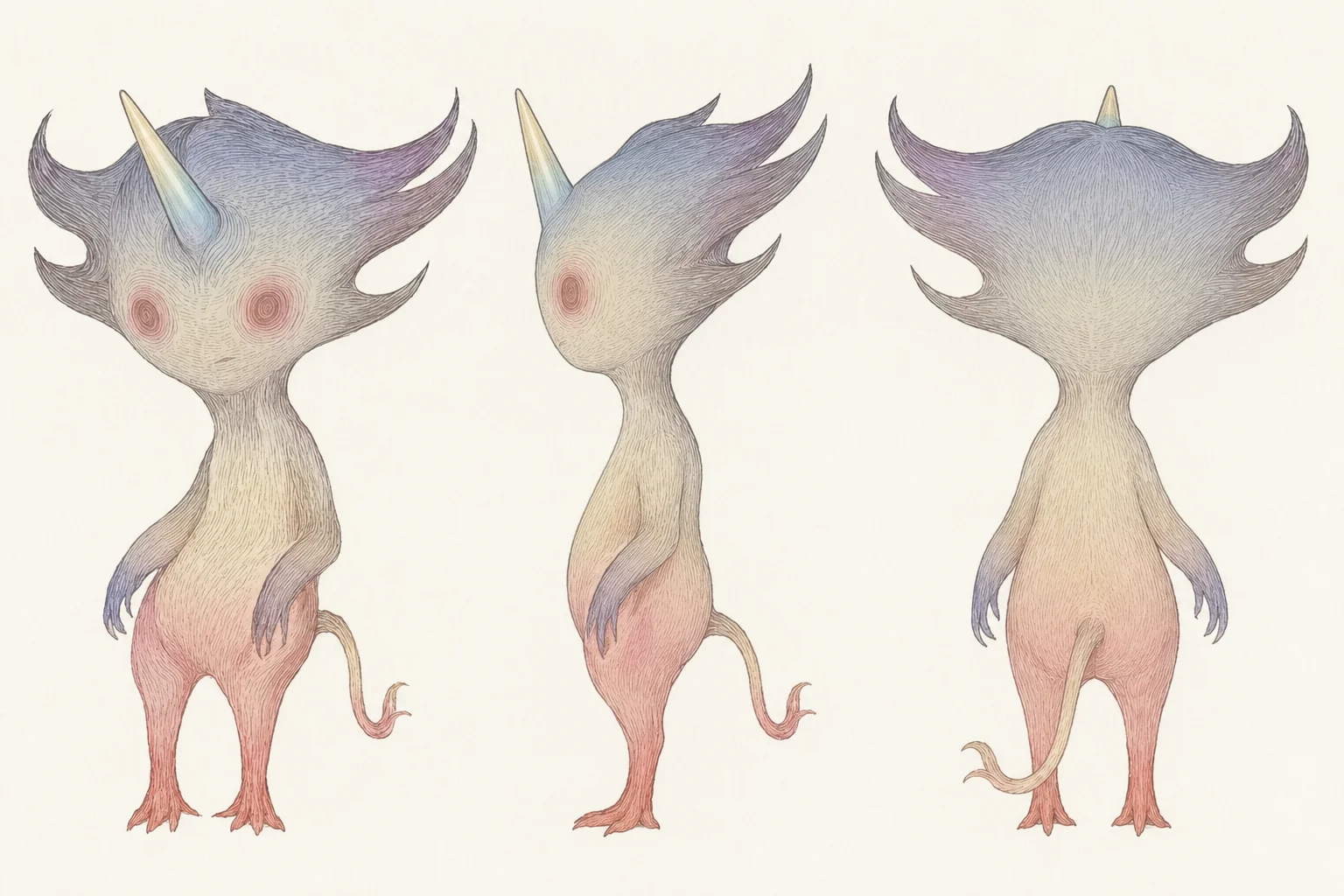
A flared fungal crown, calcified horn, small clawed hands, and rooted legs combine elegance with a quiet sense of danger. Its gradient bioluminescence connects the body visually to the surrounding ecology.
Movement
Amanis moves as if submerged in deep water: slow, fluid, and deliberate. Each step takes root, while its gestures unfold like rituals, carrying energy from the environment through its body and horn.
Boundary
Amanis can draw energy from plants and push through physical obstacles, but it responds only to slow breathing and intentions communicated in advance. Rushed movement or rough touch makes it protect its core, close itself off, and refuse interaction.
A flared fungal crown, calcified horn, small clawed hands, and rooted legs combine elegance with a quiet sense of danger. Its gradient bioluminescence connects the body visually to the surrounding ecology.
Movement
Amanis moves as if submerged in deep water: slow, fluid, and deliberate. Each step takes root, while its gestures unfold like rituals, carrying energy from the environment through its body and horn.
Boundary
Amanis can draw energy from plants and push through physical obstacles, but it responds only to slow breathing and intentions communicated in advance. Rushed movement or rough touch makes it protect its core, close itself off, and refuse interaction.
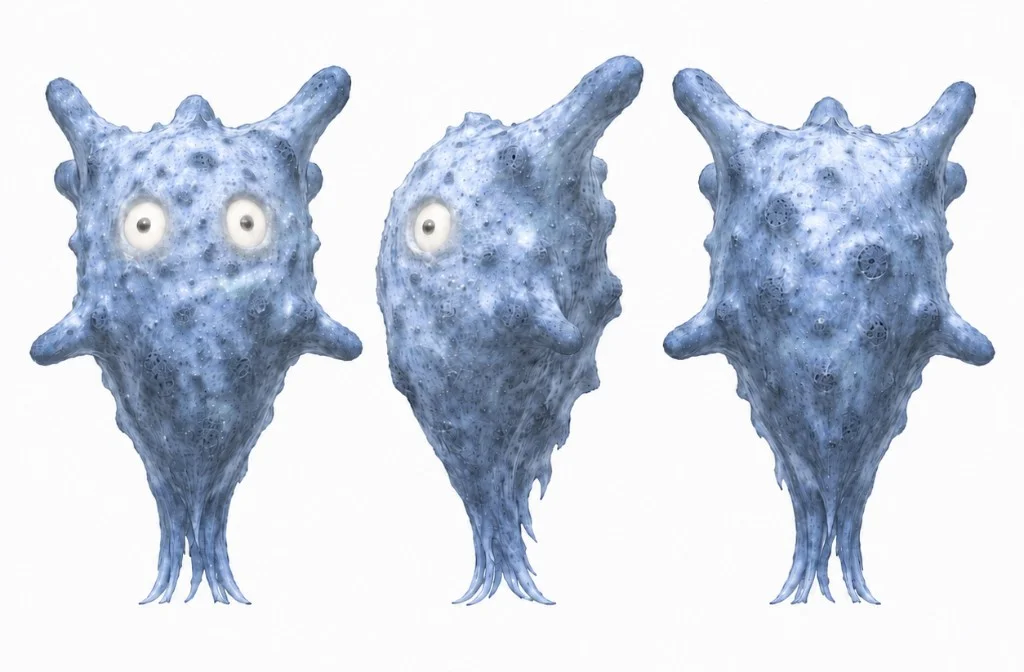
Silhouette
Bagu’s enormous rounded body, tiny arms, trailing roots, and wide eyes create a childlike giant whose scale feels intimidating but whose expression remains gentle. Irregular protrusions and porous, glowing skin preserve its alien presence.
Movement
Its roots are not built for running, so Bagu drifts and wanders like a deep-sea jellyfish. Slow turns, minimal gestures, and breathing-like pulses of blue light communicate its immense weight and calm temperament.
Boundary
Bagu acts from curiosity rather than instruction. It cannot be hurried into purposeful action; it prefers to observe unfamiliar things and responds only to gentle contact. Its immense body can reshape or destroy the environment, often without understanding what it has done.
Bagu’s enormous rounded body, tiny arms, trailing roots, and wide eyes create a childlike giant whose scale feels intimidating but whose expression remains gentle. Irregular protrusions and porous, glowing skin preserve its alien presence.
Movement
Its roots are not built for running, so Bagu drifts and wanders like a deep-sea jellyfish. Slow turns, minimal gestures, and breathing-like pulses of blue light communicate its immense weight and calm temperament.
Boundary
Bagu acts from curiosity rather than instruction. It cannot be hurried into purposeful action; it prefers to observe unfamiliar things and responds only to gentle contact. Its immense body can reshape or destroy the environment, often without understanding what it has done.
This case study presents the visual-development phase of an ongoing prototype. The biofeedback and creature-interaction systems are currently being refined and will be documented separately.