HAVEN is an experimental immersive film that traces a journey of self-discovery, moving through inner conflict toward self-acceptance and reconciliation. Its spatial narrative draws on Plato’s Allegory of the Cave and ideas from Carl Jung and Friedrich Nietzsche to externalize the often private process of confronting, understanding, and integrating different parts of the self.
In HAVEN, the self is imagined as architecture: neither mind nor body alone, but an interior structure shaped by both, as well as by the forces acting within and around them. The film moves through three symbolic layers of this inner world, treating the body as a landscape of memory, tension, and transformation.
Presented through a multi-surface projection environment rather than a headset, the work places the audience within this interior landscape and blurs the boundary between viewer and subject. Symbolic forms, shifting color, spatial sound, and movement guide the experience from confinement and fragmentation toward self-recognition, acceptance, and inner peace.
Haven
Tools
_
_
Unreal Engine 5, Maya, Metahuman,
Motion Capture,
Substance Painter
My Role
_
_
Director, Camera Operator, Animator, Cinematography, VFX, Character & environment Artist
Music Composer: Matt Cline
Description
_
_
An immersive projection film that transforms the body into a symbolic architecture of anxiety. Created in Unreal Engine 5 and presented across multiple surfaces, HAVEN guides viewers through three layers of an interior world toward self-reconciliation.








Concept
Scene & Structure
Scene Design
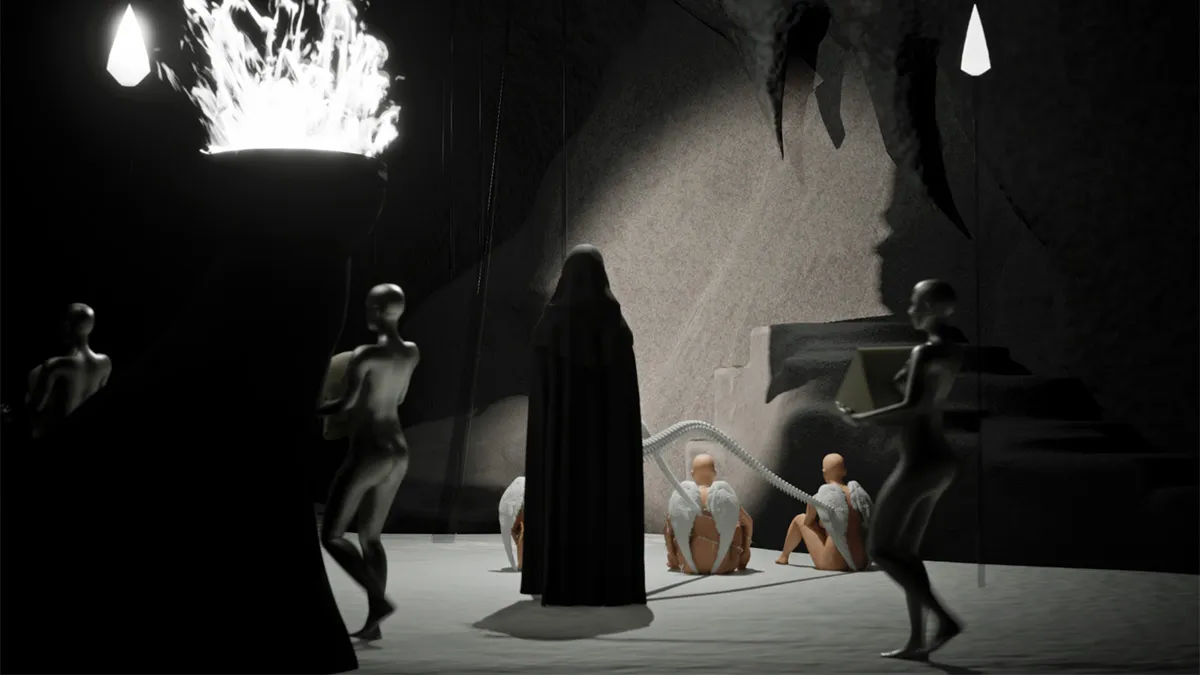
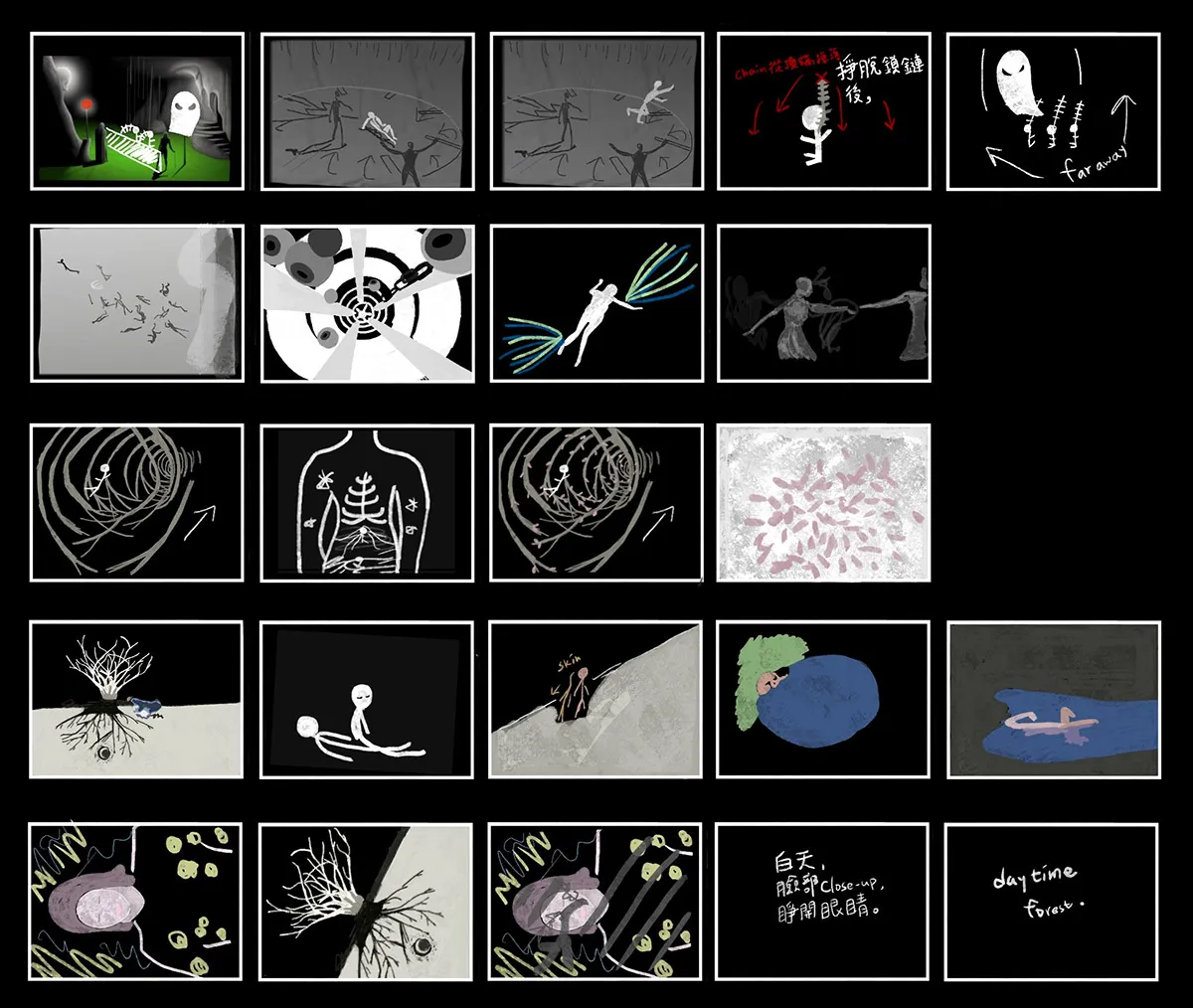
I created storyboards and animatics that translate Plato’s Allegory of the Cave into a spatial journey. After escaping the cave, the protagonist travels through three architectural levels within the body of a fallen angel before emerging into a dreamlike forest that embodies inner peace.
Drawing from Surrealism, Yin-Yang philosophy, and 19th-century Impressionism, I used shifts in color, lighting, scale, and spatial composition to give each stage a distinct emotional tone and make the protagonist’s inner transformation visible through the environment.
Drawing from Surrealism, Yin-Yang philosophy, and 19th-century Impressionism, I used shifts in color, lighting, scale, and spatial composition to give each stage a distinct emotional tone and make the protagonist’s inner transformation visible through the environment.
Architectural Design
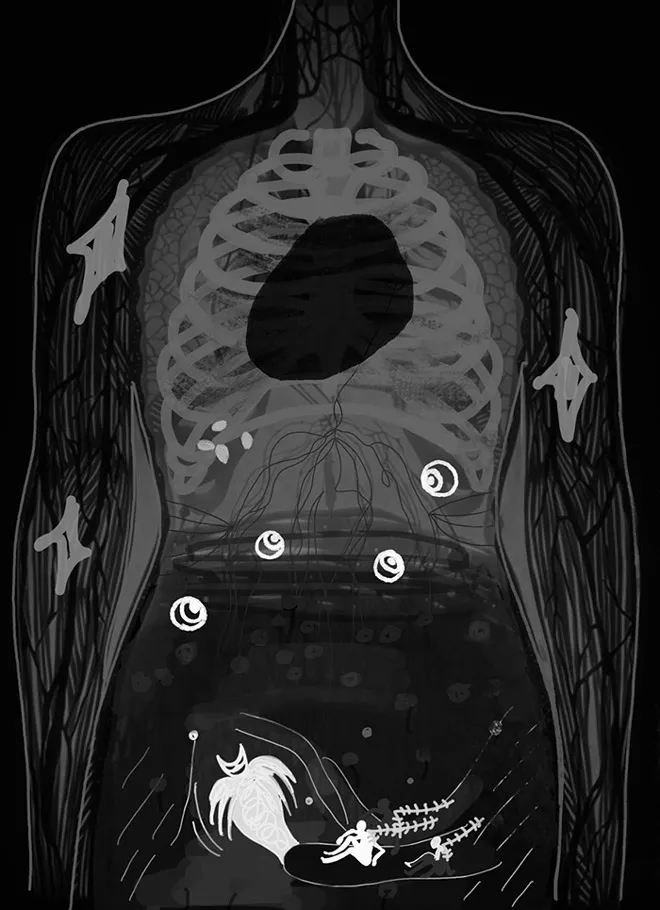
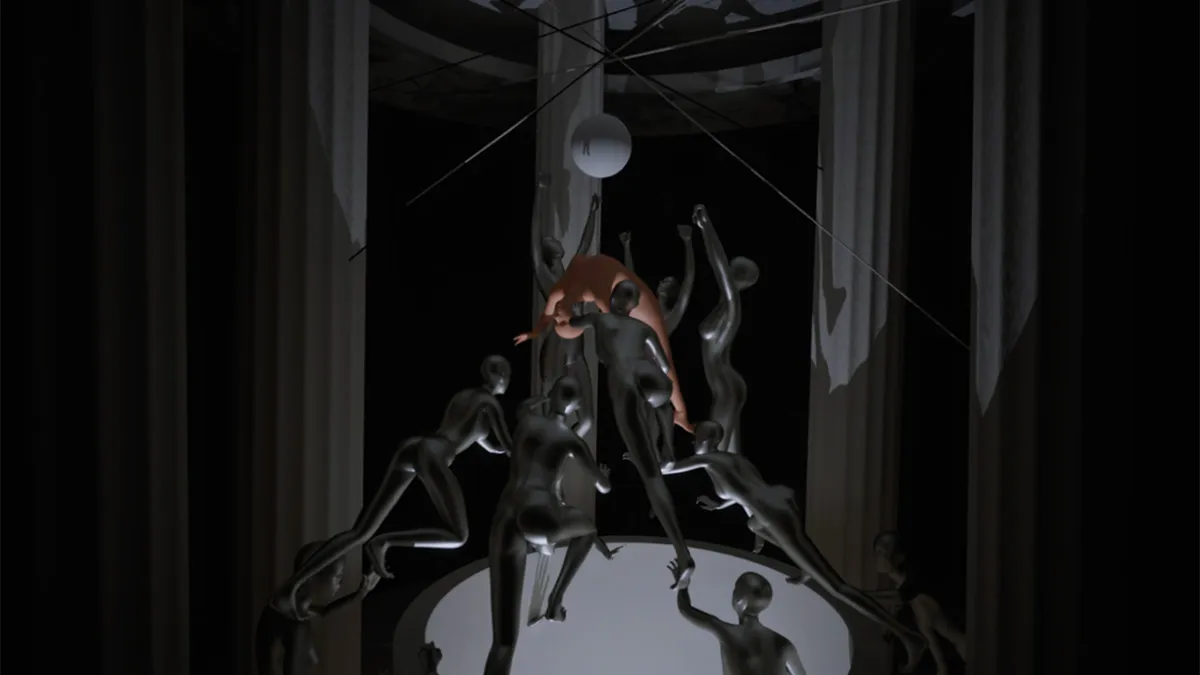
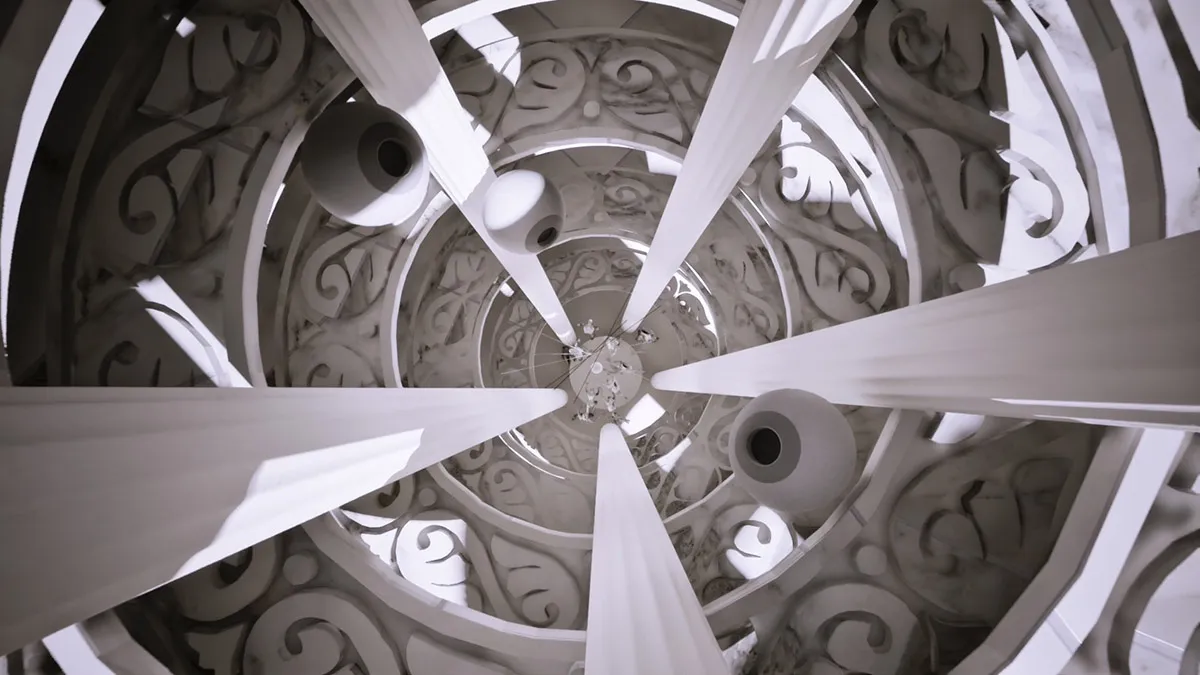
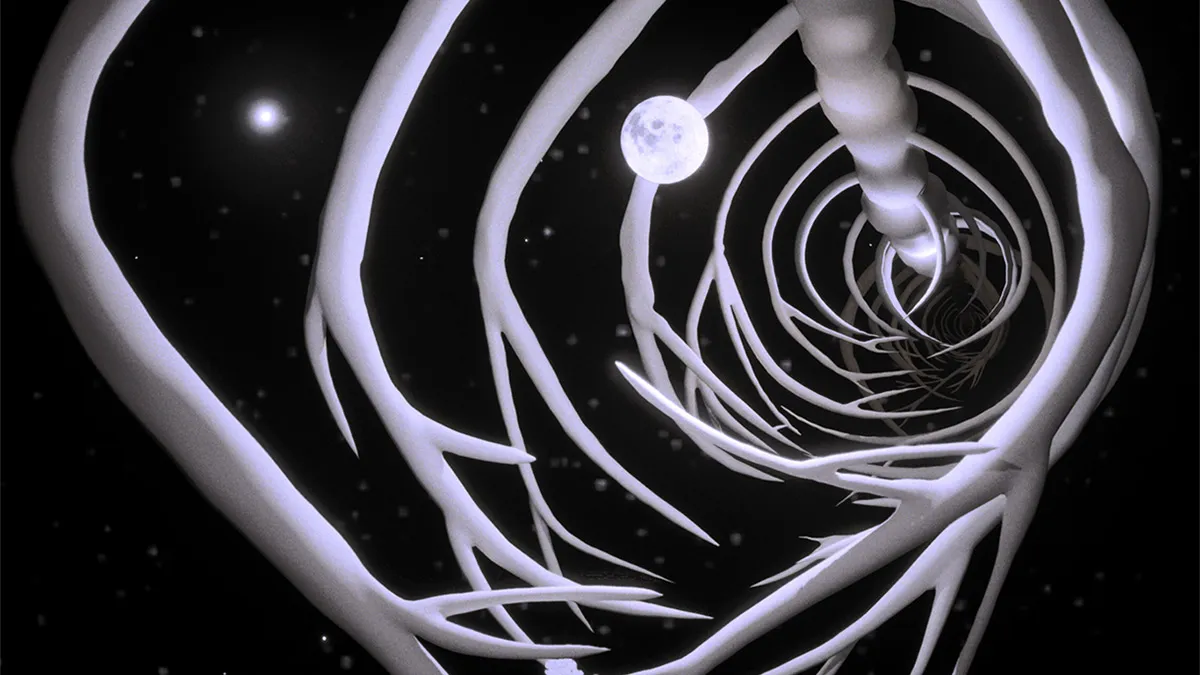
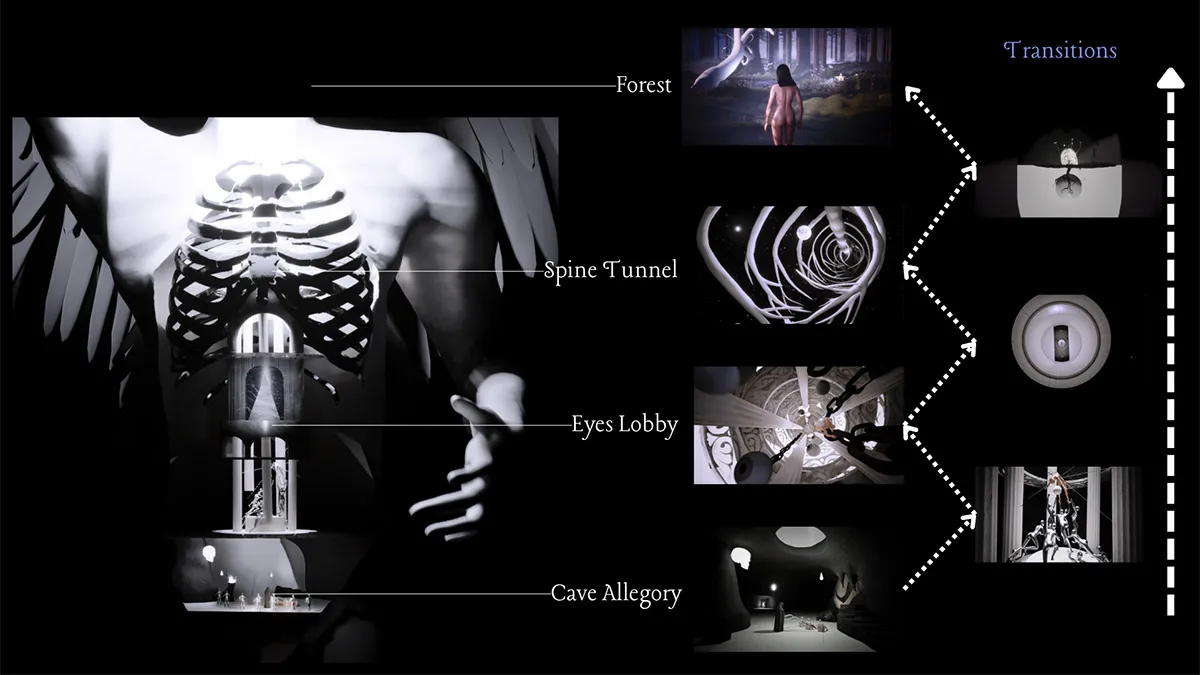
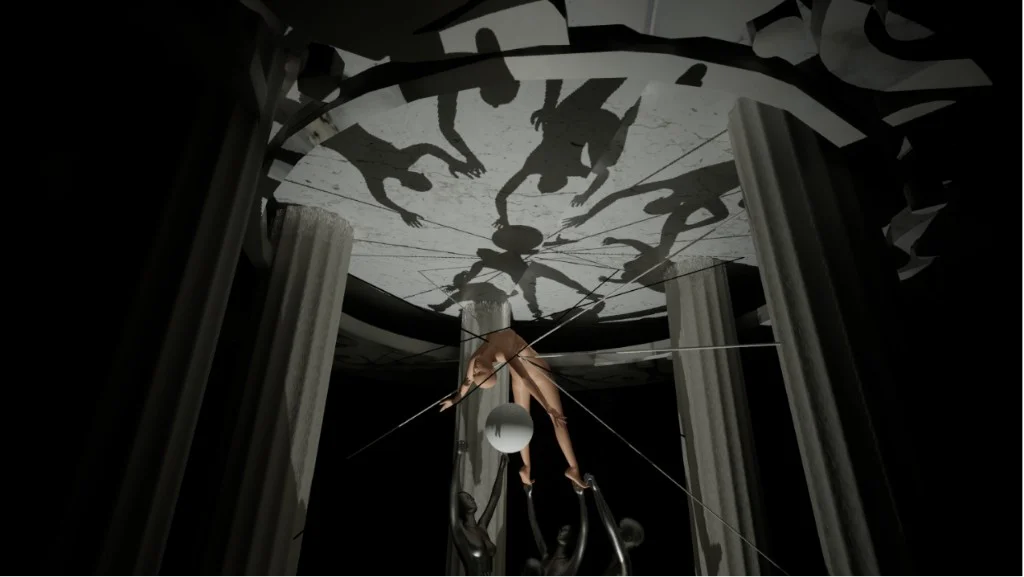
The architecture mirrors the body, functioning as both an extension of the self and a metaphorical prison for the mind and spirit. The first level, The Cave, places the protagonist among chained, identical figures, evoking confinement and the loss of individuality. The second level becomes a Roman-inspired hall filled with surreal, watchful eyes; she ascends by climbing a network of metal chains, turning vertical movement into an act of resistance. The third becomes a vast spinal tunnel, where white rib-like structures recede into a black void, embodying solitude and the uncertainty of what lies ahead.
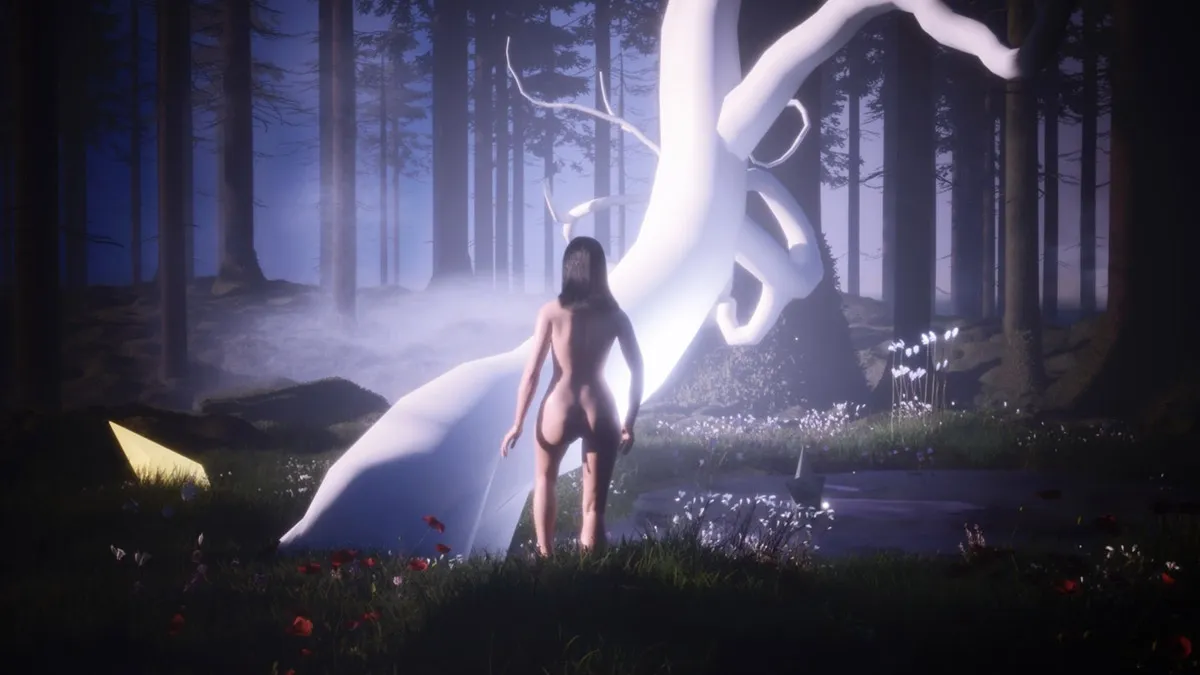
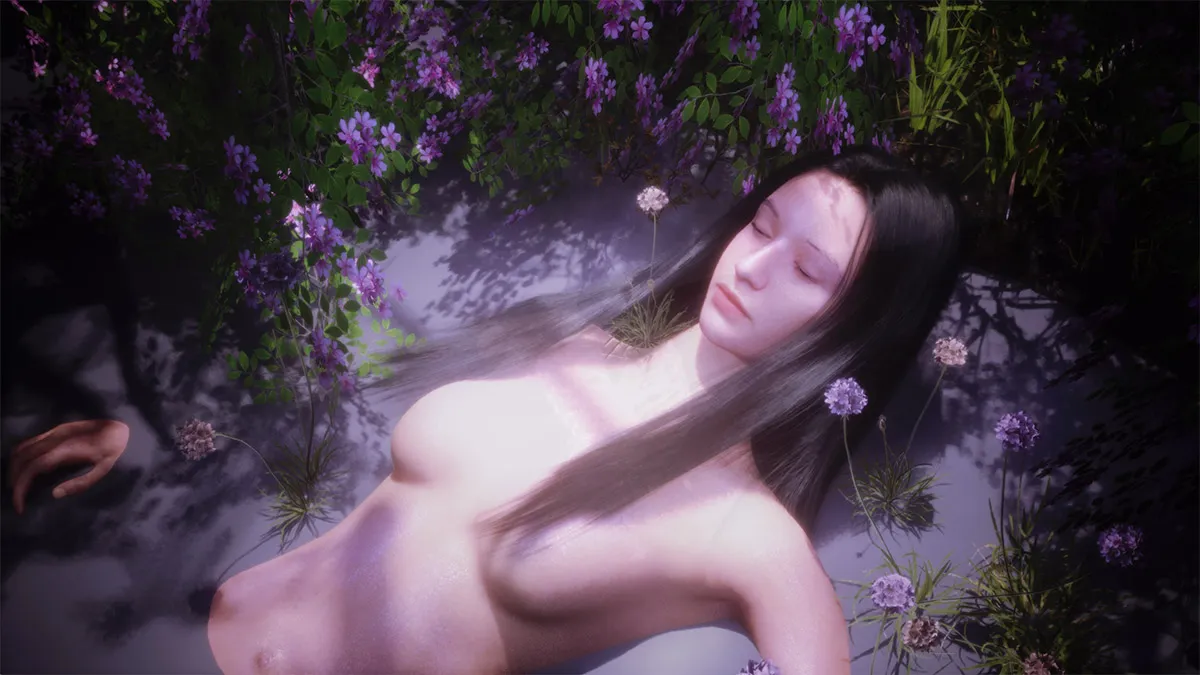
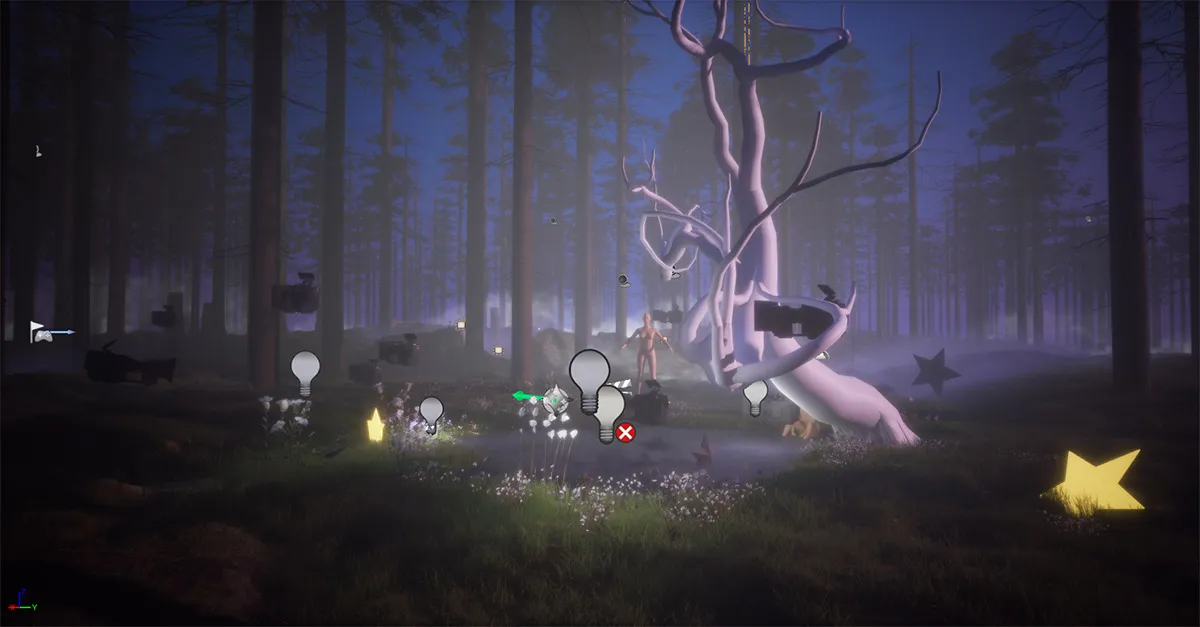
Beyond the body’s architecture, a dreamlike forest materializes the protagonist’s transformed inner state. Its openness, organic forms, and softened light mark her release from confinement and arrival at self-reconciliation.
Beyond the body’s architecture, a dreamlike forest materializes the protagonist’s transformed inner state. Its openness, organic forms, and softened light mark her release from confinement and arrival at self-reconciliation.
Protagonist
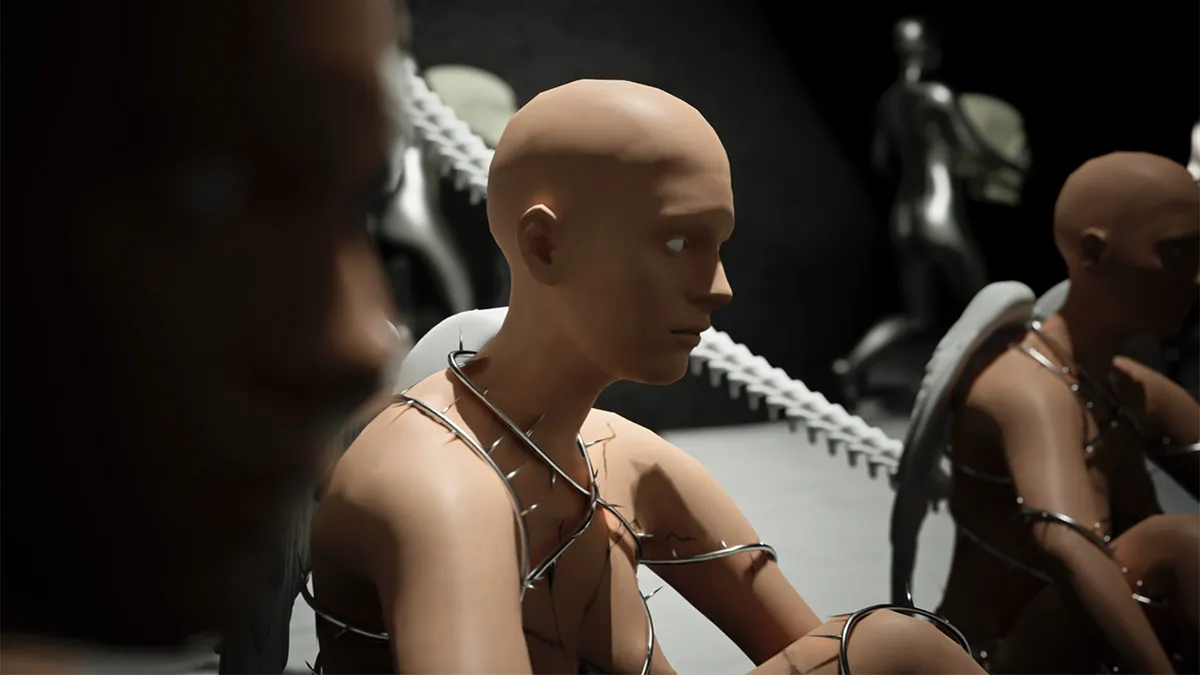
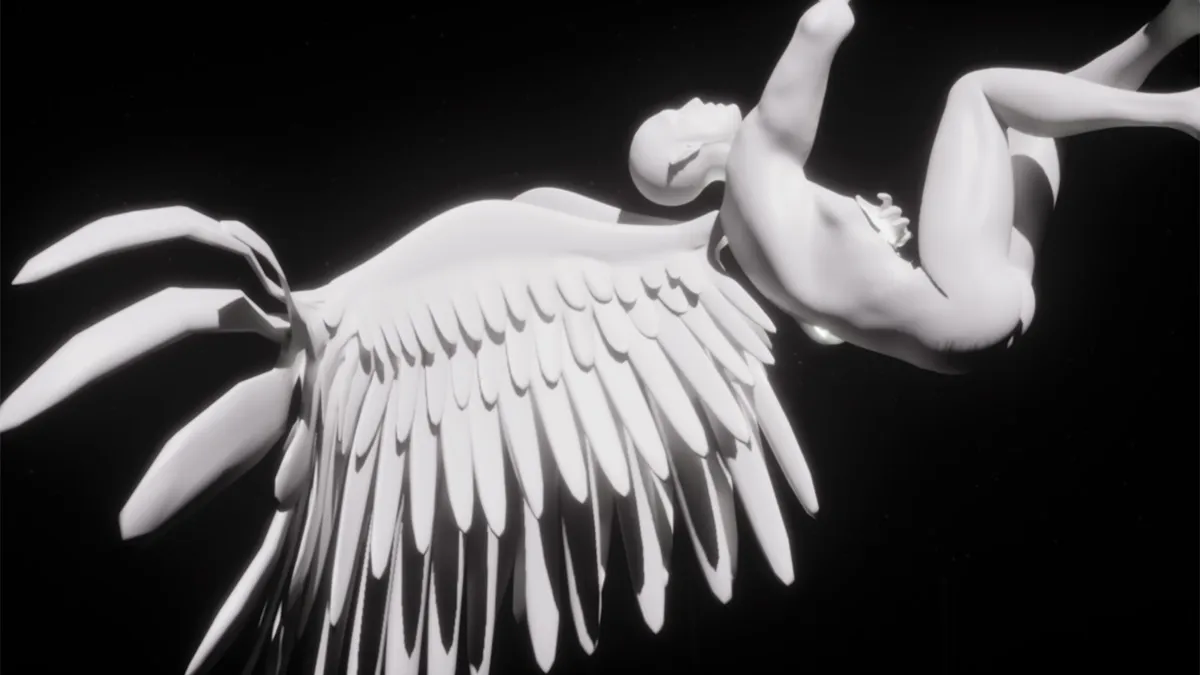
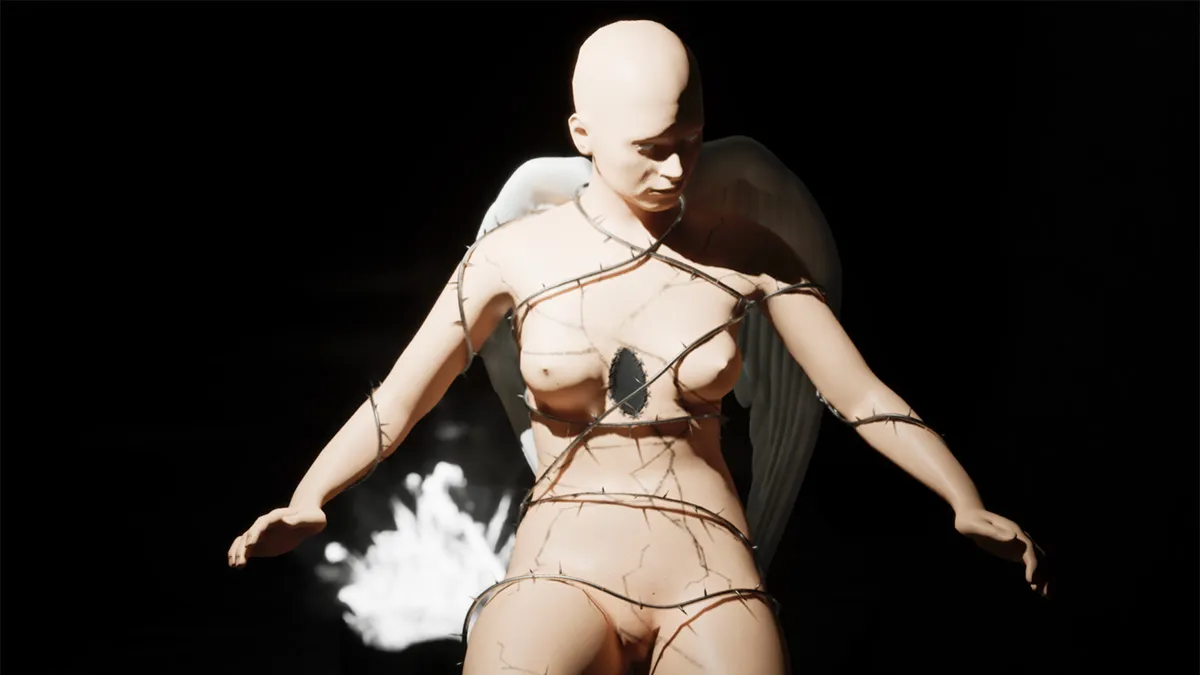
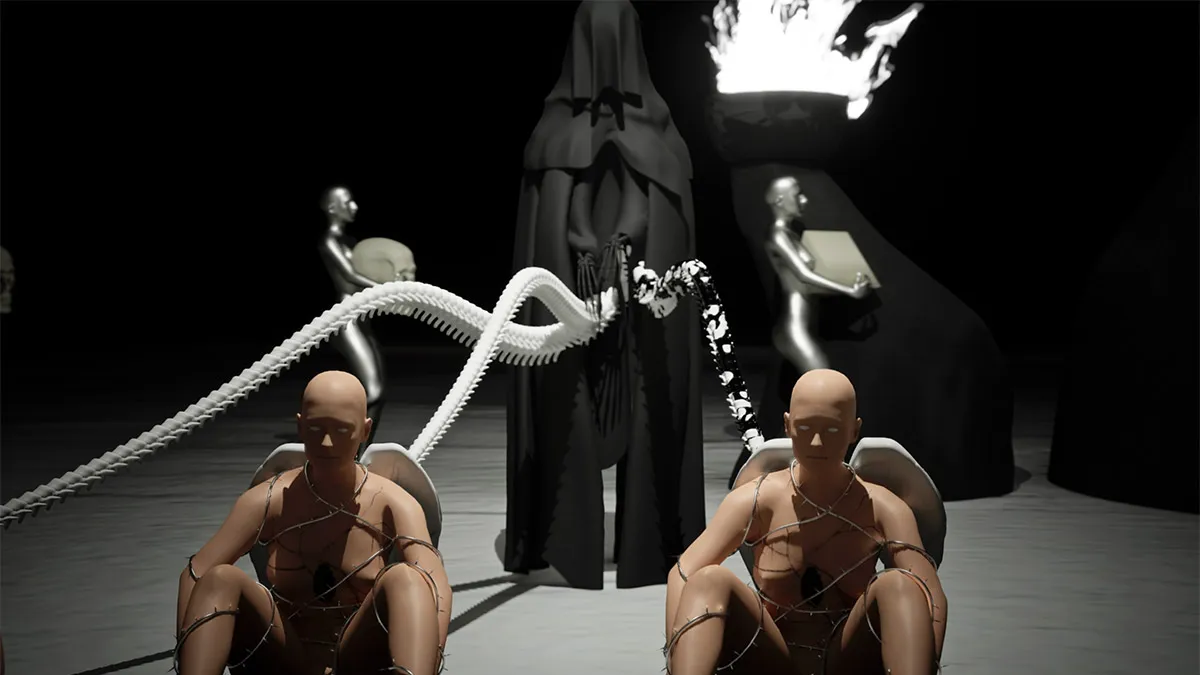
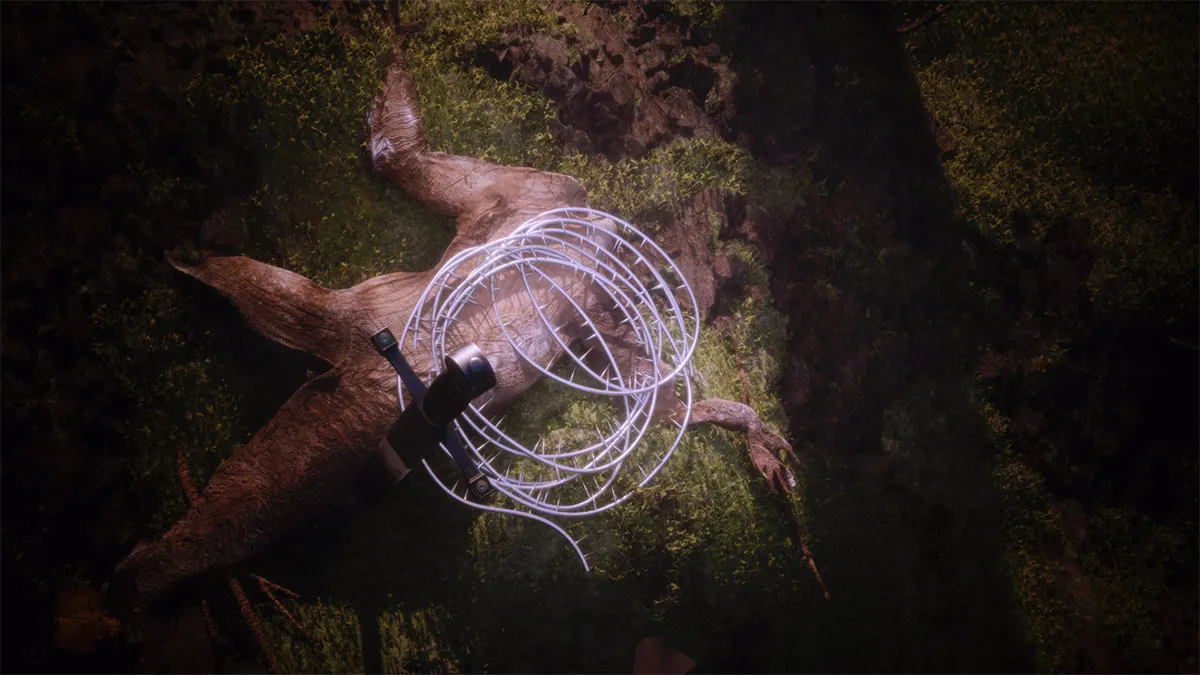
HAVEN follows a single protagonist whose physical transformation mirrors her psychological journey. Within the cave, she appears as an imprisoned angel, marked by a single wing and silver thorns that wrap around her body. These elements make her confinement, anxiety, and fragmented sense of self visible.
Through her own strength, she escapes and sheds both the thorns and her former skin. In the forest, she emerges as a luminous, unburdened version of herself, her body carrying a subtle iridescent shimmer. She has not become another person; instead, the transformation represents the recovery of a self no longer defined by fear and confinement.
Through her own strength, she escapes and sheds both the thorns and her former skin. In the forest, she emerges as a luminous, unburdened version of herself, her body carrying a subtle iridescent shimmer. She has not become another person; instead, the transformation represents the recovery of a self no longer defined by fear and confinement.

Technical Details
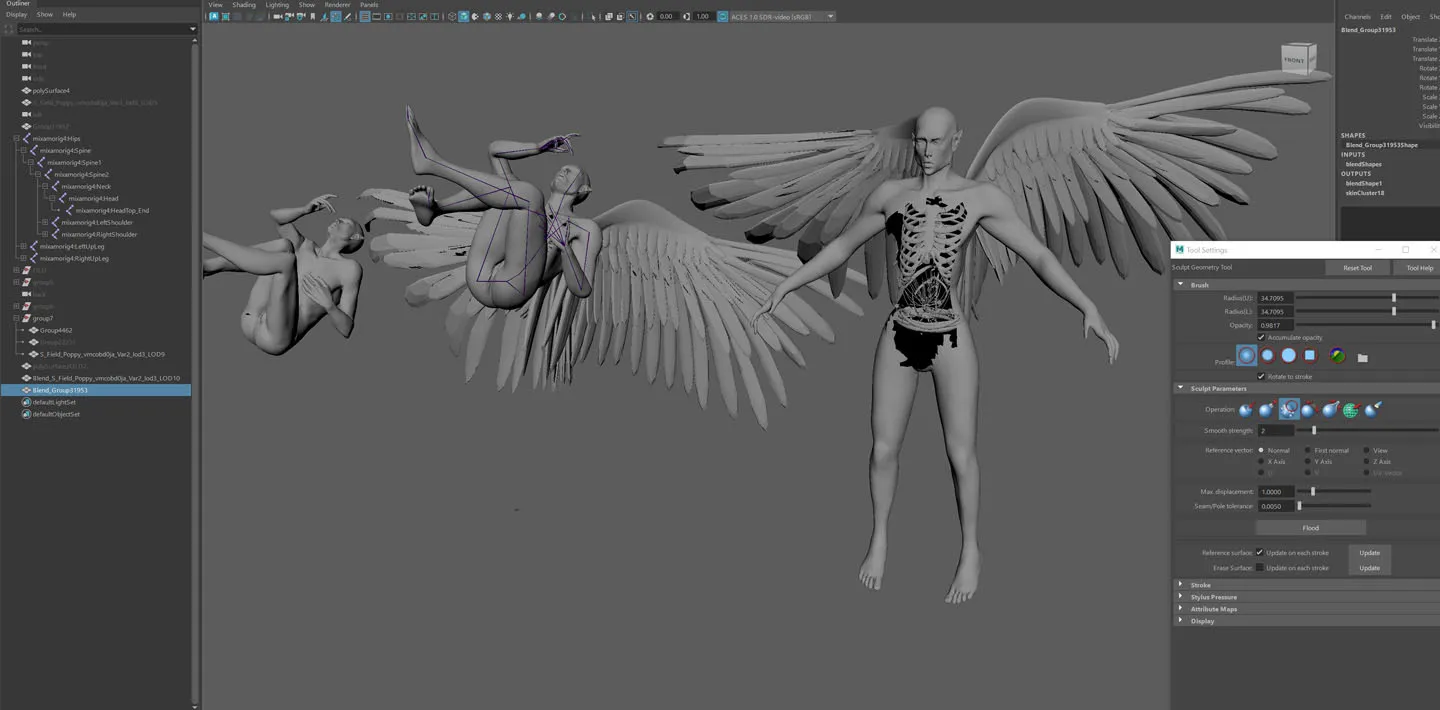
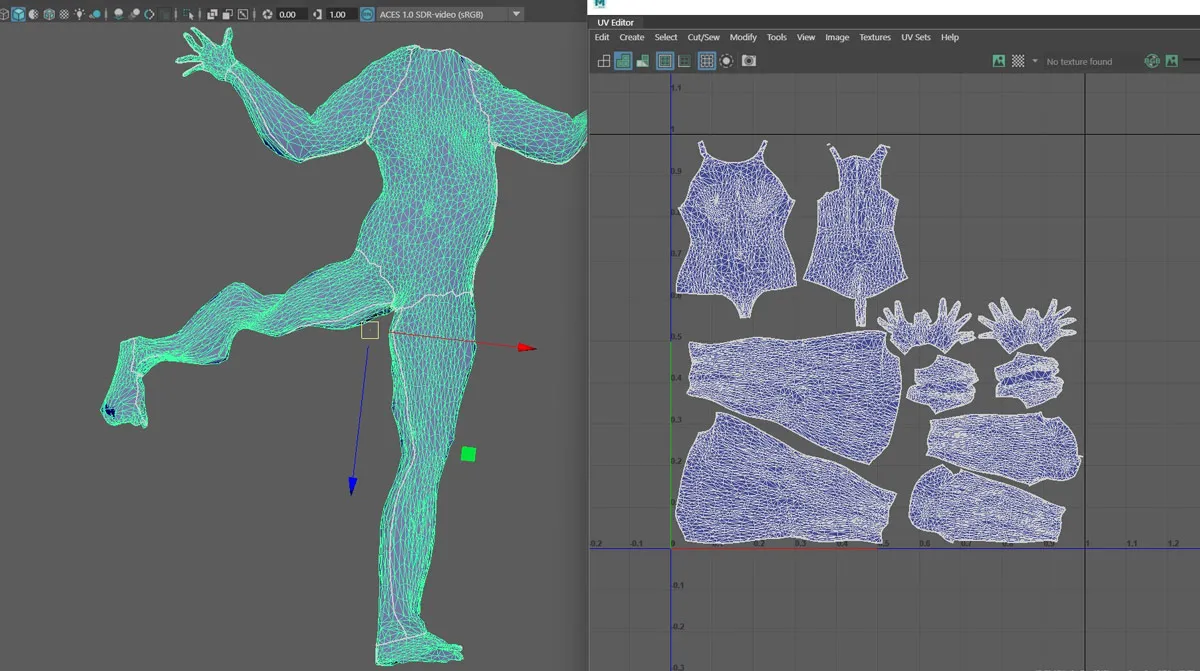
Over three months, I developed HAVEN through an iterative virtual-production workflow. I used Maya and Blender for 3D modeling, UV mapping, rigging, and animation, then brought these elements into Unreal Engine 5 for environment building, material development, lighting, VFX, and virtual cinematography.
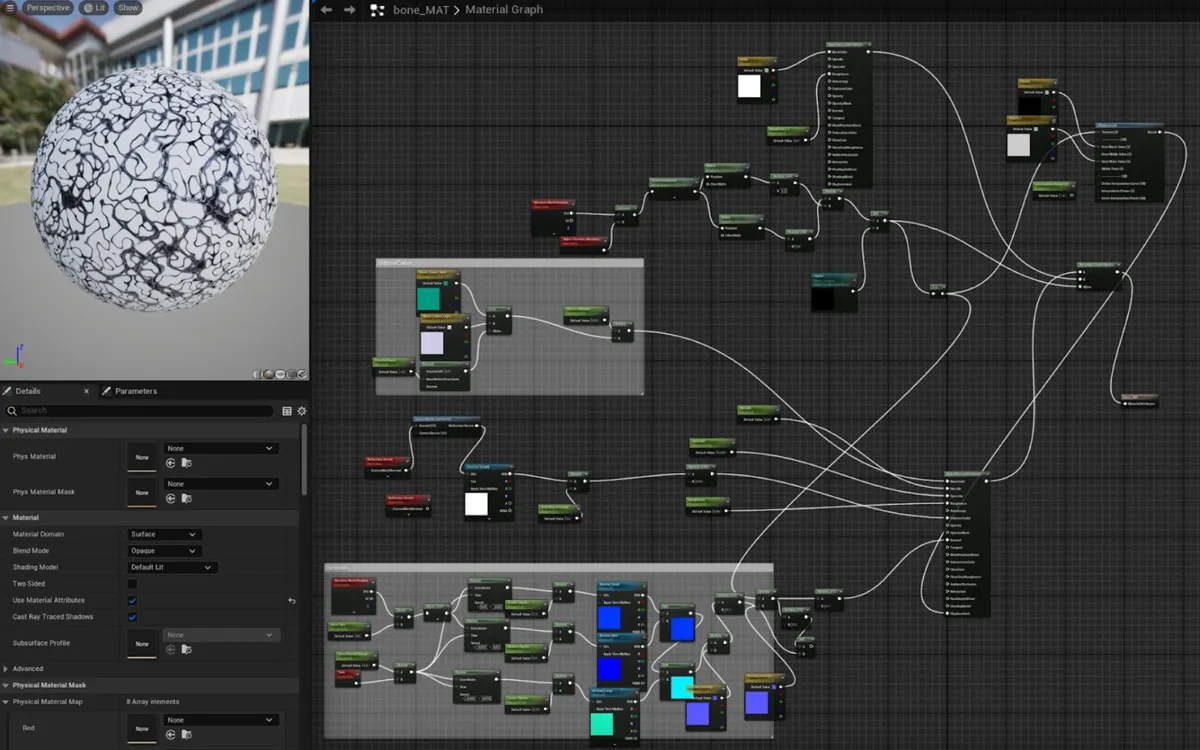
Creating Process of Water-bone Material
Throughout production, I tested multiple visual approaches and refined the pipeline to balance the project’s aesthetic ambitions with its time and technical constraints. This process allowed me to translate the film’s conceptual language into a cohesive final experience designed for multi-surface projection.